The Role of APIPA in Windows IP Address Assignment. Automatic Private IP Addressing (APIPA) is a DHCP failover mechanism for local Internet Protocol version 4 (IPv. Microsoft Windows. With APIPA, DHCP clients can obtain IP addresses when DHCP servers are non- functional. APIPA exists in all modern versions of Windows including Windows 1. How APIPA Works. Networks set up for dynamic addressing rely on a DHCP server to manage the pool of available local IP addresses.
Whenever a Windows client device attempts to join the local network, it contacts the DHCP server to request its IP address. If the DHCP server stops functioning, a network glitch interferes with the request, or some issue occurs on the Windows device, this process can fail. When the DHCP process fails, Windows automatically allocates an IP address from the private range 1. Using ARP, clients verify the chosen APIPA address is unique on the network before deciding to use it. Clients then continue checking back with the DHCP server at a periodic interval (usually 5 minutes) and update their addresses automatically when the DHCP server is again able to service requests. All APIPA devices use the default network mask 2. APIPA is enabled by default in Windows whenever the PC network interface is configured for DHCP.
In Windows utilities like ipconfig, this option is also called . They indicate network troubleshooting is required to identify and resolve the issue(s) preventing DHCP from working properly. Limitations of APIPAAPIPA addresses do not fall into any of the private IP address ranges defined by the Internet Protocol standard but still are restricted for use on local networks only. Like private IP addresses, ping tests or any other connection requests from the Internet and other outside networks cannot be made to APIPA devices directly. APIPA configured devices can communicate with peer devices on their local network but cannot communicate outside of it.
While APIPA provides Windows clients a usable IP address, it does not provide the client with nameserver (DNS or WINS) and network gateway addresses as DHCP does. Local networks must not attempt to manually assign addresses in the APIPA range else IP address conflicts will result.

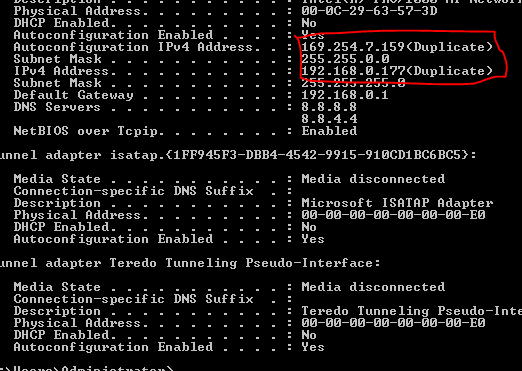
Occasionally you may encounter a host which has somehow assigned itself an IP address in the 169.254.0.0/16 range. This is a particularly common symptom of Windows.
To maintain the benefit APIPA has of indicating DHCP failures, administrators should avoid using those addresses for any other purpose and instead limit their networks to use the standard IP address ranges.
Get Windows to find your Apple Airport Extreme // drive: activated! The router connects fine to his Mac wirelessly, but for some reason the Windows XP computer could not see the Airport at all, yet can see all the neighbours' networks. Clearly it wasn't a range issue. After trying a few things, and googling, I found that it was because Apple Airport Extreme routers are, by default, set to wireless channel 1. I found this quite odd, given channel 1. US (where only channels 1 to 1. It can be used elsewhere though (including Australia), but why not just ship it on channel 6 or 1.

Anyway, because the US only allows channels 1 to 1. Windows computer, the region on the wireless card was also set to the US, hence the Airport transmitting on channel 1. It was set to the US probably because the person who installed the drivers couldn't be bothered changing it from the default and didn't know the consequences. So the solution? Rather than checking and changing the wireless region on all computers, just change the Airport's channel to 1, 6 or 1.

Requirement Value; Physical memory (RAM) 256 MB minimum; 512 MB recommended. On Windows Vista, the minimum requirement is 512 MB. Virtual memory. Double the amount of RAM. Das Internet Protocol Version 6 (IPv6), früher auch Internet Protocol next Generation (IPng) genannt, ist ein von der Internet Engineering Task Force (IETF) seit. Zero-configuration networking (zeroconf) is a set of technologies that automatically creates a usable computer network based on the Internet Protocol Suite (TCP/IP.
To do this, fire up the Airport utility on Mac or Windows, find Manual Settings, and under Wireless there should be an option to change the wireless channel. I don't know the exact steps as I helped him over the phone, but it shouldn't be too hard to find. See below for more detailed instructions.
If your Mac was connected before this change, you may have to tell it to reconnect so it can recognise the change in wireless channel. Hopefully this helps someone before they start launching into a Windows sucks tirade UPDATE (1.
There seems to be a lot of people stumbling on to this page looking for instructions on how to change the channel, so I did some research. I can't guarantee these instructions work because I don't have one, but here goes. Open up the Airport Utility, located in the,Mac OSX: Applications - > Utilities folder,Windows: Start - > All Programs - > Air. Port folder. Click rescan if you can't see it there. Enter your Airport password if asked.


/http%3A%2F%2Fph-live.slatic.net%2Fcms%2FPROJECT%20HERCULES%2Ftorque_long.jpg)
/http%3A%2F%2Fwww.ghostadventurescrew.com%2Fweb%2Fwp-content%2Fuploads%2F2014%2F06%2Fghost_ss_linda-vista-hospital_005_596x334.jpg)
/http%3A%2F%2Fwww.hwp.ru%2FTvtuners%2FPinnacle.usbvista%2FPinnacleusbvistakit-1.jpg)
/https%3A%2F%2Fae01.alicdn.com%2Fkf%2FHTB19LeiQVXXXXX3XVXXq6xXFXXXa%2FTenda-AC9-1200M-Smart-Dual-Band-802-11AC-2-4G-5GHz-Gigabit-Wireless-WiFi-Router-Repeater.jpg)