
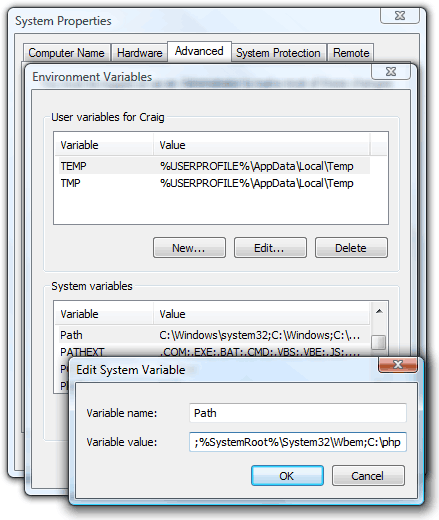
An environment variable is a dynamic "object" on a computer that stores a value, which in turn can be referenced by one or more software programs in Windows. Information on how to set the path and environment variables in Windows 2000, Windows XP, Windows Vista, and Windows 7. It is useful to set the PATH environment variable permanently so it will persist after rebooting. To make a permanent change to the PATH variable, use the System icon.
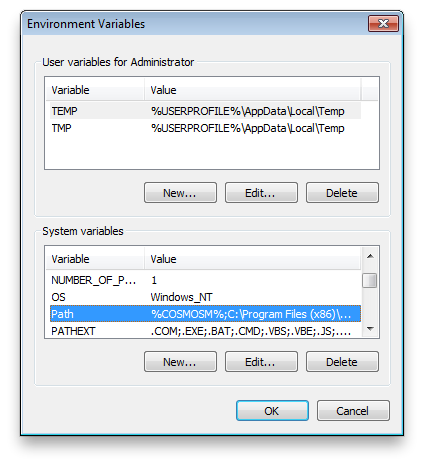
Change your PATH environment variable. Posted October 2, 2.
Step-by-Step Guide for Windows 8/8.1, 7 & Vista. It is important that you carry out these steps in order to fix the problem effectively: Modify System Variables. By default, Windows installs all the programs in C:Program Files or C:Program Files (x86) directory depending on the type of Windows 10 and program you a.
Quinn Mc. Henry in Mac system administration. When you run a command from a UNIX or UNIX- like shell, the shell looks for the executable file using the directories listed in your PATH variable as a map. For convenience, adding directories to this environment variable means you don’t have to go hunting for a file each time you run it. Following these directions will allow you to add a directory to the search PATH. To change your path, you must edit the . If you are comfortable using the vi editor, you probably don’t need to read any further.
If not, then you can use Text. Edit to edit your . The default . profile is fairly short. The . profile is read when you open a Terminal window and each line is executed just like typing a command into the Terminal window. While this is handy because you can make any available command run whenever you drop to a shell, we’re concerned with changing an environment variable, PATH. In your editor, find the line that starts with export PATH= and give it a look to make sure it doesn’t already contain the directory path you’re going to add.
Sometimes the PATH variable can get lengthy, but chances are yours just has a few directories separated by colons, perhaps something like this: export PATH=/opt/local/bin: /opt/local/sbin: $PATHThere are a few things to note before making changes. The format of this line is important. The use of spaces in this command, or their lack, matters. In particular, there cannot be spaces around the equals sign or between any of the directories. If there are spaces in the directory name you want to add, you’ll need to escape the space by preceeding it with a \backslash or by putting the path in quotes (export PATH=”/path/here”). The export= keyword in front of that line has a very specific purpose.
Defining a variable without exporting it makes it available only to the current shell, not to any subsequent shells. You may think to yourself that you don’t plan to make any subsequent shells, but this happens whenever you run a shell script. If the PATH variable was not exported, when you run a shell script, the PATH would no longer exist and it is possible that the script would fail. The $PATH at the end of the example above tacks the previous value of the variable (if it exists) onto the end of the PATH. By default, this will add .
For example, to add the directory /mightyq/bin to the PATH shown above, the line could become any of the following examples: export PATH=/mightyq/bin: /opt/local/bin: /opt/local/sbin: $PATHexport PATH=/opt/local/bin: /mightyq/bin: /opt/local/sbin: $PATHexport PATH=/opt/local/bin: /opt/local/sbin: $PATH: /mightyq/bin. Note that in the third example the new directory is added to the end of the PATH.
You have the ability to optimize the searches your shell will do on your behalf each time you run a command by organizing your PATH logically. Putting less frequently used or really massive directories later in the path may give you a little performance boost (although these days things are pretty fast, so you have to be a little anal to really enjoy this).
If you don’t need a directory in your path, you can reverse the process by deleting the unwanted directory still taking care to preserve the no spaces, colon separation rules. One last note, to test the change you made, you can use the echo command, but you need to make the shell reload the . Assuming you are in your home directory (if not, running . If you simply executed these commands like a shell script (bash .
The second period means the current working directory. It’s not compulsory in any way in this command, but it’s habit from explaining the dots to folks, so I type it all the time now. In this context, you could also use ~/. The last dot causes the . Finder view. It doesn’t change the file in any other way, it just make it invisible and de- clutters your directories. To see hidden files, you can use.


/http%3A%2F%2Fph-live.slatic.net%2Fcms%2FPROJECT%20HERCULES%2Ftorque_long.jpg)
/http%3A%2F%2Fwww.ghostadventurescrew.com%2Fweb%2Fwp-content%2Fuploads%2F2014%2F06%2Fghost_ss_linda-vista-hospital_005_596x334.jpg)
/http%3A%2F%2Fwww.hwp.ru%2FTvtuners%2FPinnacle.usbvista%2FPinnacleusbvistakit-1.jpg)
/https%3A%2F%2Fae01.alicdn.com%2Fkf%2FHTB19LeiQVXXXXX3XVXXq6xXFXXXa%2FTenda-AC9-1200M-Smart-Dual-Band-802-11AC-2-4G-5GHz-Gigabit-Wireless-WiFi-Router-Repeater.jpg)